Facebook ads for electricians work for one simple reason: homeowners do not think about their electrician until something breaks, and Facebook keeps your name in front of them before that day comes. Search ads catch people who already know they have a problem. Facebook builds the list of people who will call you first when they do.
This guide covers the ad types that book real service calls, the exact setup steps, the targeting that protects your budget, and the tracking that proves it is working. It is written for owner operated shops, not marketing departments.
Table of Contents
- Why Facebook Works for Electrical Work
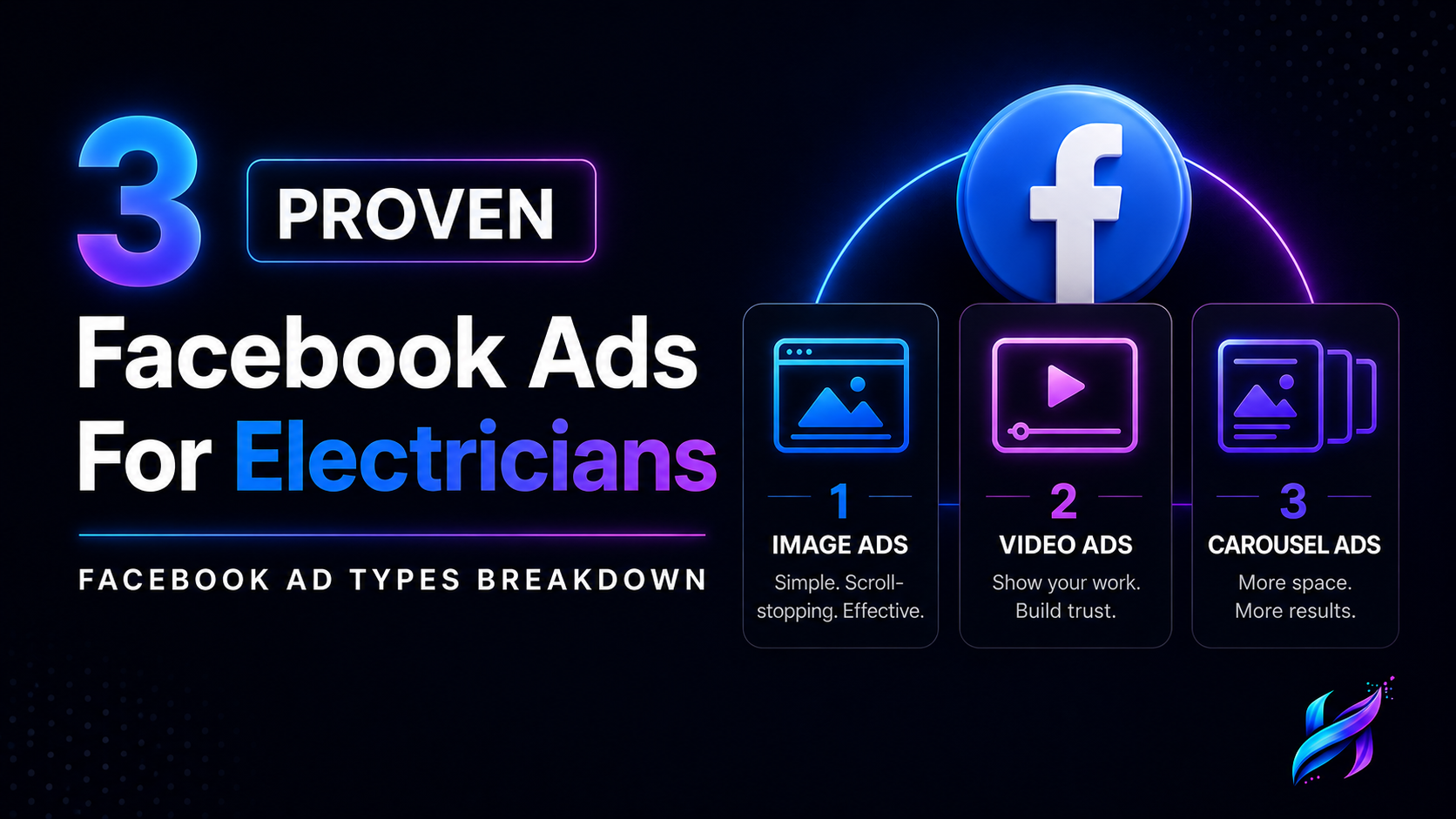
- The 3 Ad Types That Book Jobs
- How to Set Up Your First Campaign, Step by Step
- What to Put in the Ad: Copy and Creative
- Targeting That Does Not Waste Budget
- Retargeting: The Cheapest Jobs You Will Ever Book
- What It Costs and What to Expect
- A 90 Day Facebook Ads Plan for an Electrical Shop
- Facebook Ads or Google Ads First?
- Seasonal Angles That Keep the Ads Fresh
- Track It or You Are Guessing
- 5 Facebook Ad Mistakes Electricians Keep Making
- The Bottom Line
- Frequently Asked Questions
Why Facebook Works for Electrical Work
Electrical jobs are either emergencies (a tripped panel, dead outlets, a burning smell) or planned upgrades (EV chargers, generator hookups, panel swaps, remodel wiring). Facebook is weak for the first kind and strong for the second. Nobody scrolls Facebook during a power outage. But plenty of homeowners scroll past an EV charger install ad three weeks before they buy the car.

So the goal of an electrician’s Facebook campaign is not to be there in the emergency. It is to own the planned work and be remembered when the emergency hits.
The 3 Ad Types That Book Jobs
1. The specific offer lead ad
One service, one price anchor, one form. “EV charger installed, permitted, and inspected. Free quote in 24 hours.” The form opens inside Facebook using Meta’s lead ads format, so nobody has to load your website. Specific beats general every time: “electrical services” ads get scrolled past, “whole home surge protection installed for less than your insurance deductible” ads get clicks.
2. The before and after
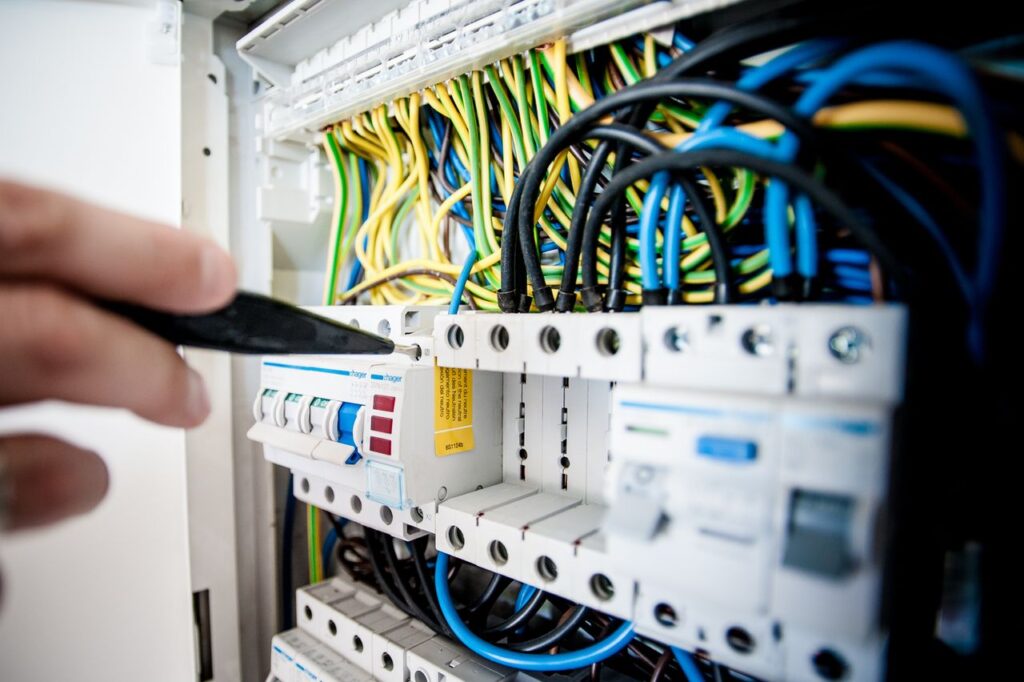
A rusted, double tapped 1970s panel next to a clean new 200 amp panel does more selling than any headline. Electricians sit on a goldmine of these photos and never post them. Run them as a carousel with one line about what the homeowner avoided.
3. The review ad
Take your best Google review, put the text over a photo of the actual tech who did the job, and run it to your retargeting audience. People hire the electrician their neighbors vouch for.
How to Set Up Your First Campaign, Step by Step
The first campaign of Facebook ads for electricians takes about an hour to set up and most of that is one-time plumbing. Here is the whole sequence.
- Set up Business Manager. Go to business.facebook.com, connect your Facebook page, create an ad account, and add a payment method. Ten minutes, done once, never again.
- Install the Meta pixel on your website. Even if you only run instant forms at first, the pixel quietly builds your retargeting audience from day one. RankMath users can paste it through their theme header or a snippet plugin.
- Create a campaign with the Leads objective. Not Boost Post, not Awareness, not Traffic. Leads, with instant forms as the conversion location.
- Build the audience. A radius around your real service area and age 30 plus. Keep it broad beyond that; Meta’s targeting got smarter after the privacy changes, and your offer does the qualifying now.
- Set the budget at the campaign level. $20 to $50 a day. Resist the urge to start lower; under about $20 a day the system never collects enough data to optimize.
- Build one ad. One service, one offer with a number in it, one before and after photo, and a form that asks two qualifying questions, like zip code and project timeline.
- Launch it and leave it alone for 14 days. Answer the leads fast, but do not touch the campaign settings while Meta is learning.
That is genuinely the whole setup. The shops that struggle are almost never struggling with the software. They struggle with the offer, the photo, and the follow-up, which is what the next two sections fix.
What to Put in the Ad: Copy and Creative
The first five words of the ad do most of the work, because that is all anyone reads before deciding to keep scrolling. Lead with the problem, not your company name. “Your panel is 40 years old” stops a homeowner cold. “Smith Electric has served the community since 1998” does not.
A simple primary text formula that keeps working: problem, proof, offer, deadline. Name the thing that is wrong, show you have fixed it a hundred times, give one specific offer with a number in it, and give a reason to act this month instead of someday.
- Real job photos beat stock photos every single time. A phone picture of your tech in front of a finished panel outperforms a polished agency graphic.
- Faces build trust. The techs who show up at the door belong in the ads.
- A 30 second walkthrough video of a panel swap, narrated in plain English, is the strongest creative most shops will ever run.
- Put the offer in the image text too, not just the caption. Most people never read the caption.
Weak offer: “free estimates.” Everyone offers free estimates. Strong offer: “$0 down EV charger install, permitted and inspected, on the calendar within 7 days.” Specific, numbered, and time-bound wins.
Targeting That Does Not Waste Budget
- Radius around your real service area, not the whole state. Drive time matters more than miles.
- Homeowners. Renters call landlords, not electricians.
- Age 30 and up. Younger audiences click, cost money, and never book.
- Retarget everyone who watched a video, opened a form, or visited the site in the last 90 days. This audience is small, cheap, and books the most jobs.
Retargeting: The Cheapest Jobs You Will Ever Book
Cold audiences are where Facebook ads for electricians cost the most, because strangers need convincing. Warm audiences are where they print. A homeowner who watched your panel swap video, opened your lead form, or visited your website is already halfway to calling, and showing that person one more ad costs pennies.
The sequence is simple. Cold traffic sees the specific offer ad. Everyone who engages but does not convert moves into a warm audience and sees the review ad, your best Google review over a photo of the tech who earned it. Form abandoners get a gentle reminder of the same offer they almost took.
Put 10 to 20 percent of the budget on retargeting and keep it running all the time. On most accounts we manage, the retargeting layer produces the lowest cost per booked job of anything in the account.
What It Costs and What to Expect
Most owner operated shops can validate Facebook with $20 to $50 a day. Expect the first two weeks to run expensive while the platform learns. Judge the campaign on cost per booked job after 30 days, not cost per click after 3 days. One of our roofing clients cut cost per lead from $94 to $31 once the offer and creative matched what homeowners actually wanted, and the same pattern holds for electrician marketing.
A 90 Day Facebook Ads Plan for an Electrical Shop
Here is the schedule we put behind Facebook ads for electricians when a shop starts from zero. Ninety days is enough to know exactly what a booked job costs you and whether to scale.
Days 1 to 30: validate
One campaign, one offer, $20 to $50 a day. Hands off for the first 14 days while Meta learns. Track every lead to its outcome: booked, quoted, ghosted, junk. The only number that matters at day 30 is cost per booked job.
Days 31 to 60: scale what worked
Kill the losing ad variations, raise the winner’s budget about 20 percent per week, and launch a second offer aimed at a different service. Turn on the retargeting layer with the review ad.
Days 61 to 90: compound
Upload your customer list and let Meta build a lookalike audience from it. Keep review ads always on. Raise budget until the schedule is as full as you want it, then hold. Some shops stop here and just maintain; that is a fine outcome.
- Weekly 15 minute check: leads answered within 5 minutes? cost per booked job trending right? any ad fatiguing (frequency over 3)?
- Monthly: swap in fresh job photos, retire tired creative, revisit the offer.
Facebook Ads or Google Ads First?
If the budget only covers one platform, the honest answer depends on how full the schedule already is. A shop with empty slots this week needs Google, because search catches people who need an electrician today. A shop booked two weeks out grows faster on Facebook, because it fills the pipeline with planned upgrades at a lower cost per lead.
Running both, even unevenly, beats either alone. Google converts the demand that exists, and Facebook ads for electricians create demand that was not there yet, then hand the brand recognition back to your search ads. We wrote a full side by side on this in our Google Ads vs Meta Ads breakdown, including the budget splits we use for local service businesses.
One practical rule: never split a tiny budget evenly. Under $1,500 a month, pick the platform that matches your scheduling problem and go all in until the numbers earn an expansion.
Seasonal Angles That Keep the Ads Fresh
Creative wears out. The same panel photo that pulled leads in March gets ignored by June, and frequency creeps past 3 while cost per lead climbs. The fix is not more budget, it is a calendar of seasonal angles, the same way roofers ride storm season.
- Spring: remodel wiring and ceiling fan installs while homeowners renovate.
- Early summer: panel capacity checks before AC season pushes old panels past their limit.
- Hurricane and storm season: standby generator installs and surge protection, the strongest urgency angle of the year.
- Fall: EV charger installs timed to year-end vehicle purchases and tax credit deadlines.
- Winter: holiday lighting circuits and space heater load safety checks.
Rotate the offer with the season, keep the structure identical, and the campaign never goes stale. The audience, form, and budget barely change; only the angle does, which means refreshing Facebook ads for electricians takes an hour a quarter, not a rebuild.
Track It or You Are Guessing
A lead that never gets a call back is ad spend lit on fire. Before you spend a dollar: a call tracking number on the ads, leads pushed into a CRM with an automatic text response, and a weekly count of booked jobs per campaign. If you cannot name your cost per booked job, the campaign is not finished being set up.

5 Facebook Ad Mistakes Electricians Keep Making
Most Facebook ads for electricians fail for reasons that have nothing to do with the platform. These five mistakes cover almost every losing campaign we audit.
1. Boosting posts instead of running campaigns
The boost button buys engagement, not leads. A real campaign built in Ads Manager with a leads objective costs the same money and actually books jobs.
2. Sending clicks to the homepage
A homepage gives people eight places to wander off. Send ad traffic to a lead form or a single page with one offer and one button.
3. Running one ad that lists every service
Panels, fans, outlets, lighting, and more sells nothing to nobody. One ad, one service, one reason to act now.
4. Quitting during the learning phase
Facebook spends its first one to two weeks figuring out which homeowners in your area respond. Shutting the campaign off at day 10 throws that tuition away and starts the bill over.
5. Slow follow-up
A lead answered in 5 minutes books the job. The same lead answered in 5 hours already called someone else. An automatic text-back is the cheapest fix in all of marketing.
The Bottom Line
Pick one planned service: EV chargers, panel upgrades, or generators. Build one specific offer ad, one before and after, and one review ad. Target homeowners in your real service area, retarget everyone who engages, and measure booked jobs, not clicks. Give it 30 days before you judge it and rotate the angle with the seasons.
That is the entire playbook, and it fits inside $1,000 a month. The shops that win with Facebook ads are not the ones with the biggest budgets. They are the ones that answer leads in 5 minutes, keep one specific offer in front of the right zip codes, and let the numbers make the decisions.
Frequently Asked Questions
How much should an electrician spend on Facebook ads?
$20 to $50 a day is enough to validate Facebook for most owner operated electrical shops, which is $600 to $1,500 a month. Judge results on cost per booked job after 30 days, not clicks after 3. A professionally managed Meta Ads campaign usually earns back its management fee in the wasted spend it prevents.
Do Facebook ads work for emergency electrical calls?
Not well. Emergencies belong to Google, where people search the moment something breaks. Facebook owns the planned work, EV chargers, panel upgrades, and generators, and keeps you remembered for the day an emergency hits. The full breakdown is in our Google Ads vs Meta Ads comparison.
How long does it take for Facebook ads to work for electricians?
Two to four weeks. Meta’s learning phase takes one to two weeks, and the verdict number, cost per booked job, is only trustworthy at day 30. More patience math like this lives on our marketing tips blog.
Do Facebook lead forms bring junk leads?
Some, and the fix is friction plus speed. Add two qualifying questions to the form, like zip code and timeline, and answer every lead within 5 minutes with an automatic text. Junk rates drop fast when the offer is specific, because tire kickers do not fill out forms about 200 amp panel upgrades.
What is the best first Facebook ad for an electrician?
A lead form ad with one specific offer, like an EV charger install or a panel upgrade quote. One service, one price anchor, one form. It is the fastest ad to launch and the easiest to measure, and it is the first thing we build in our electrician marketing engagements.
How do I know if my electrician Facebook ads are working?
One number: cost per booked job, measured after 30 days. That requires call tracking and a CRM that ties every lead to its campaign. If your current setup cannot produce that number, book a free audit and we will show you what is missing.
Ready to Put These Ads to Work?
Running Meta ad campaigns for service businesses is what HelixEdge does all day. Book a free audit and we will show you exactly what your current ads are missing.